


Study In The USA
Why the US?
International students prefer the U.S. US institutions rank first worldwide, making the country the holy grail of higher education and research. In 2018, 2 lakh Indian students studied in the US. The US attracts overseas students with its high-quality education, research, and work prospects.
Perks of Studying in USA
Top University in The US


Types of post-secondary institutions
Community College
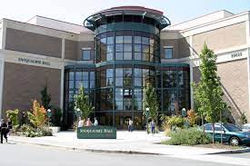
Associate degree programmes and certifications are typically completed in two years at community colleges. Community colleges have, over the course of several decades, increasingly embraced the implementation of programmes with a vocational focus. Among the many community colleges in the United States are:
State College or University
 |  |
|---|---|
 |
Degree programmes offered by state universities can be categorised into a wide variety of categories. Because their tuition is lower than that of other colleges, they offer an economical and appealing alternative for students coming from other countries. The campus communities and extracurricular offerings of state colleges are thriving, and the educational facilities at these institutions are on the cutting edge of technology. More than 60,000 students are enrolled in the nation's largest public schools and universities.
The following are examples of notable state colleges in the United States:
.jpg)
Pennsylvania State University

Washington State University

Arizona State University
Private College and University
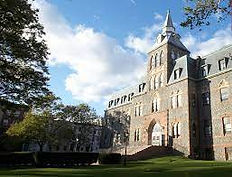
Students attending private universities have the benefit of attending classes with fewer classmates, which makes it easier for them to form relationships with their instructors and academic counsellors. Students have the opportunity to tailor their education and participate in classes that focus more on open debate, despite the fact that the number of degree options they offer is more limited. One of the most prestigious associations of private educational institutions in the world is found in the United States and is known as the Ivy League. The Ivy League is comprised of the following eight educational institutions:
.jpg)
University of Miami
.jpg)
Stevens Institute of Technology

Brown University

Columbia University

Northwestern University
.jpg)
New York University
Institute of Technology
Universities that focus their academic efforts on the fields of engineering, technology, applied sciences, and natural sciences are known as institutes of technology. Examples include:

Illinois Institute of Technology
.jpg)

Massachusetts Institute of Technology
Georgia Institute of Technology
Requirements for post-graduate study in the US
Academic Requirements:
The student's previous level of academic achievement will determine whether or not they are accepted into a study course. Every school has its own requirements for the minimal number of passing grades, marks, or cumulative averages (GPAs) that it will consider. Additionally, in certain circumstances, students are required to have previously finished one or more necessary topics, commonly known as precursor subjects.
Language Proficiency Requirements
Language Proficiency Requirements
The Test of English as a Foreign Language, also known as the TOEFL, is the exam that is given the most frequently in American universities and colleges. In addition, the International English Language Testing System (IELTS) is recognised. The minimum score required for admission to a particular university or programme can vary.
While some schools merely consider the overall score, others establish minimum and maximum levels for the points obtained in each of the four skill categories. In most cases, students who wish to enrol in an undergraduate programme are required to have one of the following:
IELTS scores between 6.0 and 7.5 overall with no band lower than 6.0 on the TOEFL (internet-based test, iBT). TOEFL scores between 60.0 and 100.0 on the iBT.
General Exams
The Graduate Management Admission Test, also known as the GMAT, is designed to evaluate a candidate's ability to analyse, write, perform quantitative analysis, communicate verbally, read, and comprehend written English in preparation for admission to a graduate management programme, such as an MBA programme.
The Graduate Record Examination, sometimes known as the GRE, is yet another examination that applicants to graduate institutions who intend to pursue a Master of Arts or Master of Science degree are required to complete. Scores on the Graduate Record Examination (GRE) are being accepted by an increasing number of business schools for the purpose of awarding admission to their MBA programmes.
The Law School Admission Test, more commonly known as the LSAT, is a standardised examination that is required as part of the application process for law school. The Law School Admission Test (LSAT) is a standardised test that evaluates a candidate's potential to perform well in the first year of law school.
US student visa
There are three distinct categories of visas that can be obtained according to the level of education being pursued:
F Student Visa: For college or university students who want to study in the US.
J Student Visa: For high school and college students who want to take part in an exchange programme.
M Student Visa: For students who want to study or train in the US in a field other than academics or work. Before you can apply for a student visa, you must be accepted by a school in the US that is approved by the Student Exchange and Visitor Program (SEVP). Once you are accepted to a school, the international student office will give you an I-20 or DS-2019 form. When a student applies for a visa, they will need to show these forms.
Here is a list of what you will need to do to get a F Student Visa:
1. Showing proof that they plan to go back to their home country after they finish their studies.
2. They can only study at the school listed on their visa.
3. Showing that you have enough money to live in the United States.
Strong ties to your home country can be shown by:
● A job offer for after graduation
● A house, land, etc
● Bank accounts
● Family
Working while studying in the US
With an F1 visa, you can work on campus
International students who come to the US on an F1 visa can work while they are in school.
Students with a valid F1 visa can work on campus as long as they follow these rules:
-
During full-time semesters, work 20 hours per week.
-
Work more than 20-hours per week between quarters semester
-
Work more than 20 hours a week when school is not in session (including winter and summer break)
-
Most of the time, you can find work on campus in the cafeteria, library, research labs, or admissions office.
-
Students can have more than one job, but they must stick to the hours they are allowed to work.
Working On-Campus with F1 Visa
International students who want to work off campus have two options. It's important to remember that they have to finish their first year of school before they can work off campus.
With an F1 visa, you can work on campus
Here are the choices:
Curricular Practical Training (CPT): CPT lets you do training, work, or internships that may be part of your degree programme. Before getting their degree, students in some programmes have to do an internship.
Optional Practical Training (OPT): With OPT, you can do an off-campus job or internship in your field of study for up to a year. There is an option for students in STEM (science, technology, engineering, and math) programmes to get an extra 24 months of OPT, for a total of 36 months. If a student wants to do OPT, they need an extra visa.
After post - graduation - What’s next?
After your OPT is over, you can switch to a visa sponsored by your employer.
The H1B visa, which is tied to a certain job, is the most common visa sponsored by an employer in the U.S. To be eligible, you must find a job with an employer who will pay for your visa. Your employer will have to send your application to the U.S. lottery, which happens every April. Employers can only apply once a year, so if you miss the deadline, you'll have to wait until the next year.
Each year, only 85,000 visas are given out. Because there are so many applications, there is usually more demand than supply. Depending on the year, between 30% and 50% of people who apply get a visa. The visas usually start working four or five months after the lottery. You can't work until your visa is approved, so you'll have to stay in your home country unless you're already working in the U.S. on another visa, like OPT. You can also get into the U.S. with your H1B visa.
US citizenship for life:
To become a permanent resident of the U.S., you must switch from an H-1B visa to a Green Card. This is usually the best option for skilled people who want to stay in the U.S. for a long time.
You can work in the U.S. for up to six years with an H-1B visa. After that, you can apply for permanent residency.
Employers start the change from an H-1B visa to a Green Card based on employment. Most of the time, U.S.-based companies that help people get work visas are also the ones who help them get Green Cards.
Today is the day to start working on your application with Dexter's Portal.
Using Dexter's Portal, you can make it to the United States and further your education there.
If you want to make your academic dreams come true, Dexter's Portal is here to support you every step of the way.
To provide you with the greatest individualised counselling experience possible, our staff of qualified, experienced counsellors collaborates with successful student mentors currently enrolled in top colleges in the US.
We assist with every step of the process, from narrowing down potential majors to obtaining visas, from applying to universities to providing financial aid advice.
We value profound knowledge and compassion, and we are dedicated to assisting our students in reaching their full potential.
-
Taking into account your needs
-
Helping you choose the proper college/University and course.
-
Getting your college application submitted on time
-
Gathering the Required Paperwork
-
Providing guidance throughout the entire procedure
-
The key to a successful admissions process
-
Helping you get the most out of your US bank account, credit card, or student loan
-
Helping you every step of the way with your Visa application
-
Provide guidance on foreign exchange and travel needs
-
Planning your relocation to the United States